START HERE
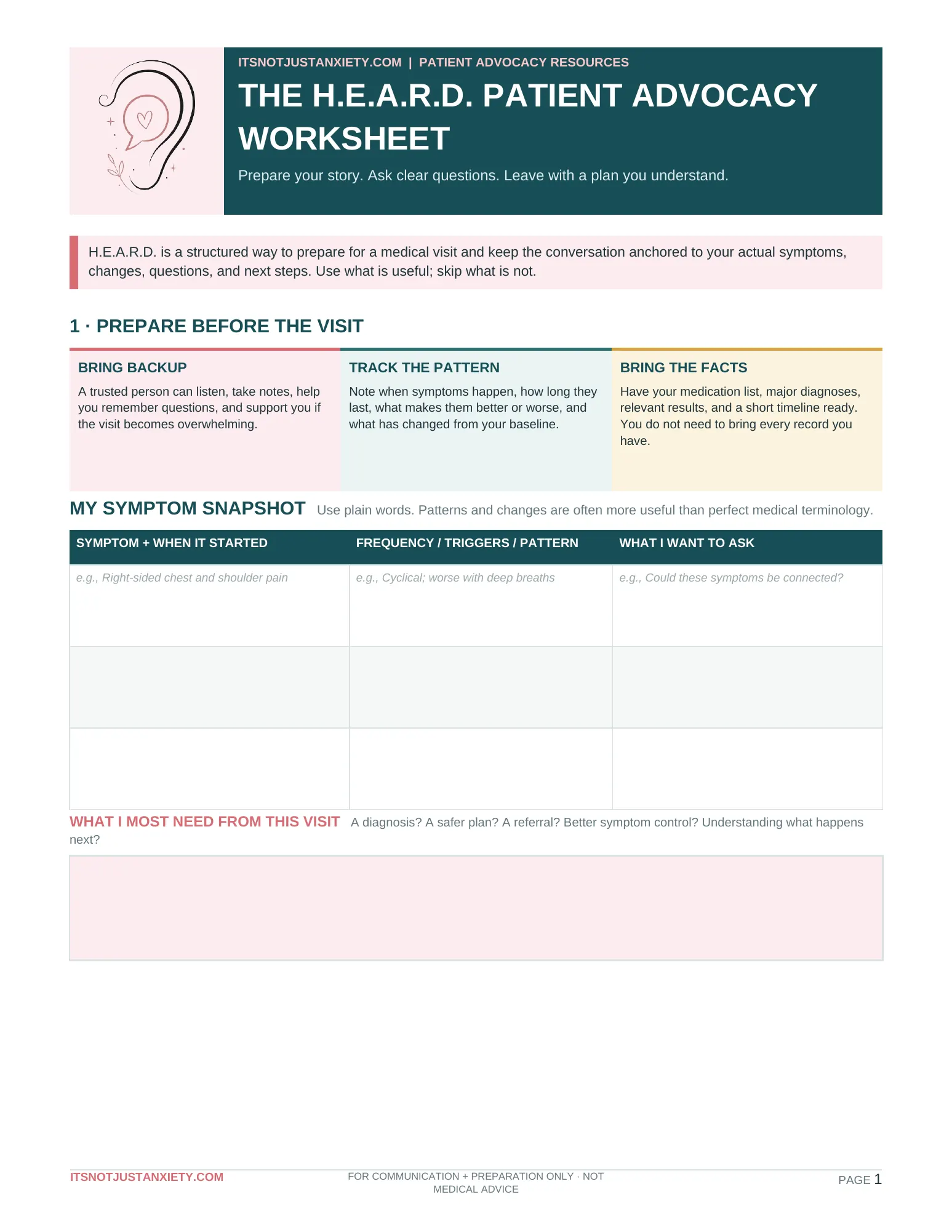
The H.E.A.R.D. Patient Advocacy Worksheet
Organize your symptom story, identify what is different, and use five conversation anchors when you need the visit to stay focused.
Download PDF ↓PATIENT ADVOCACY • COMMUNICATION • PREPARATION
It may be anxiety. It may be something else. Either way, your symptoms deserve a real conversation.
These tools won't diagnose you or turn every “no” into a “yes.” They will help you prepare, describe what has changed, ask clearer questions, understand the reasoning, and leave knowing what happens next.
Free PDFs. No sign-up. Print them, save them, take them with you.

A SIMPLE GOAL
Prepare your story.
Ask clear questions.
Leave with a plan.
Being heard does not always mean hearing “yes.”
It means understanding the reasoning and the plan.
FREE PATIENT ADVOCACY TOOLKIT
Four practical, printable tools for before, during, and after a medical visit. Start with the one you need today — or grab all four.
Organize your symptom story, identify what is different, and use five conversation anchors when you need the visit to stay focused.
Download PDF ↓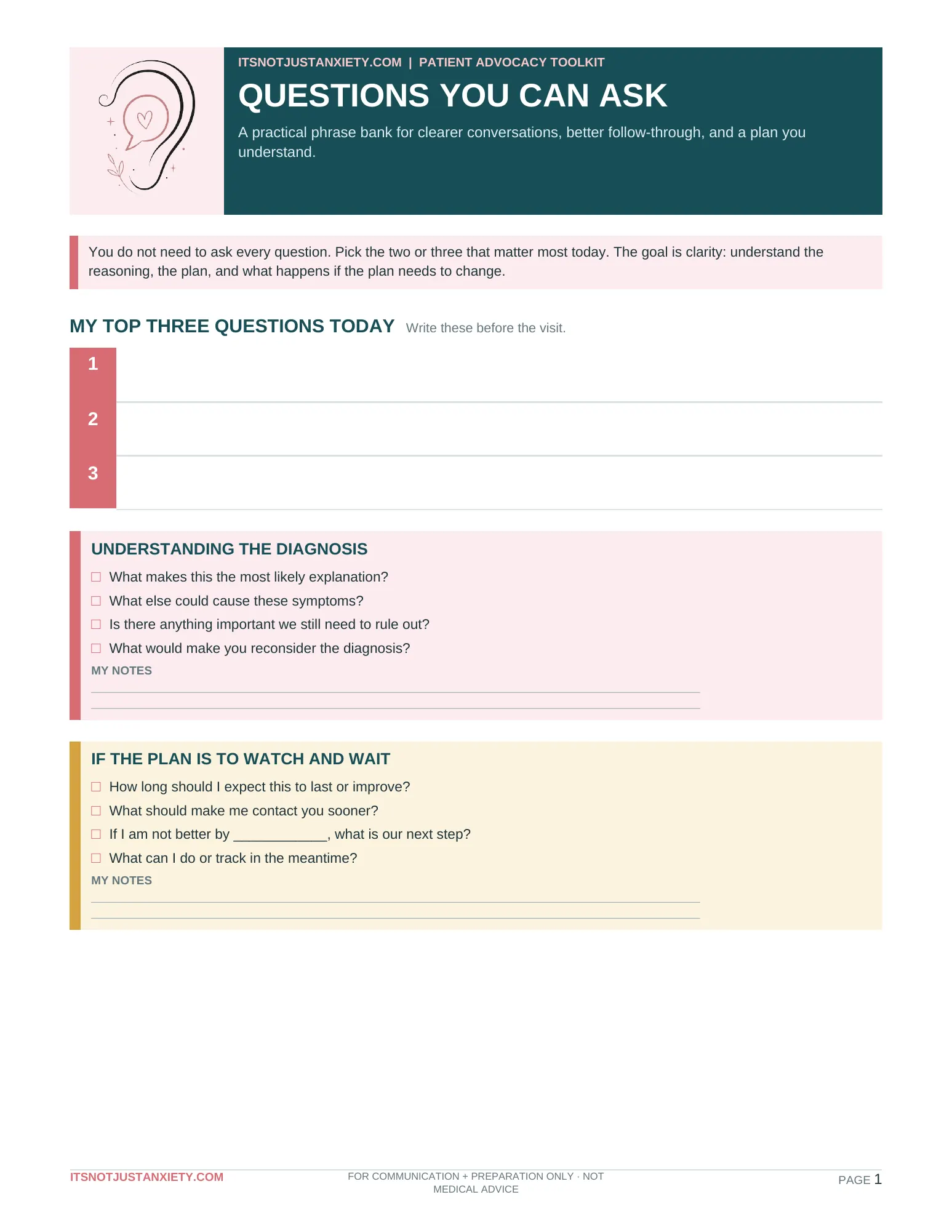
Plain-language prompts for diagnosis, watchful waiting, normal tests, anxiety in the conversation, and the four questions to ask before you leave.
Download PDF ↓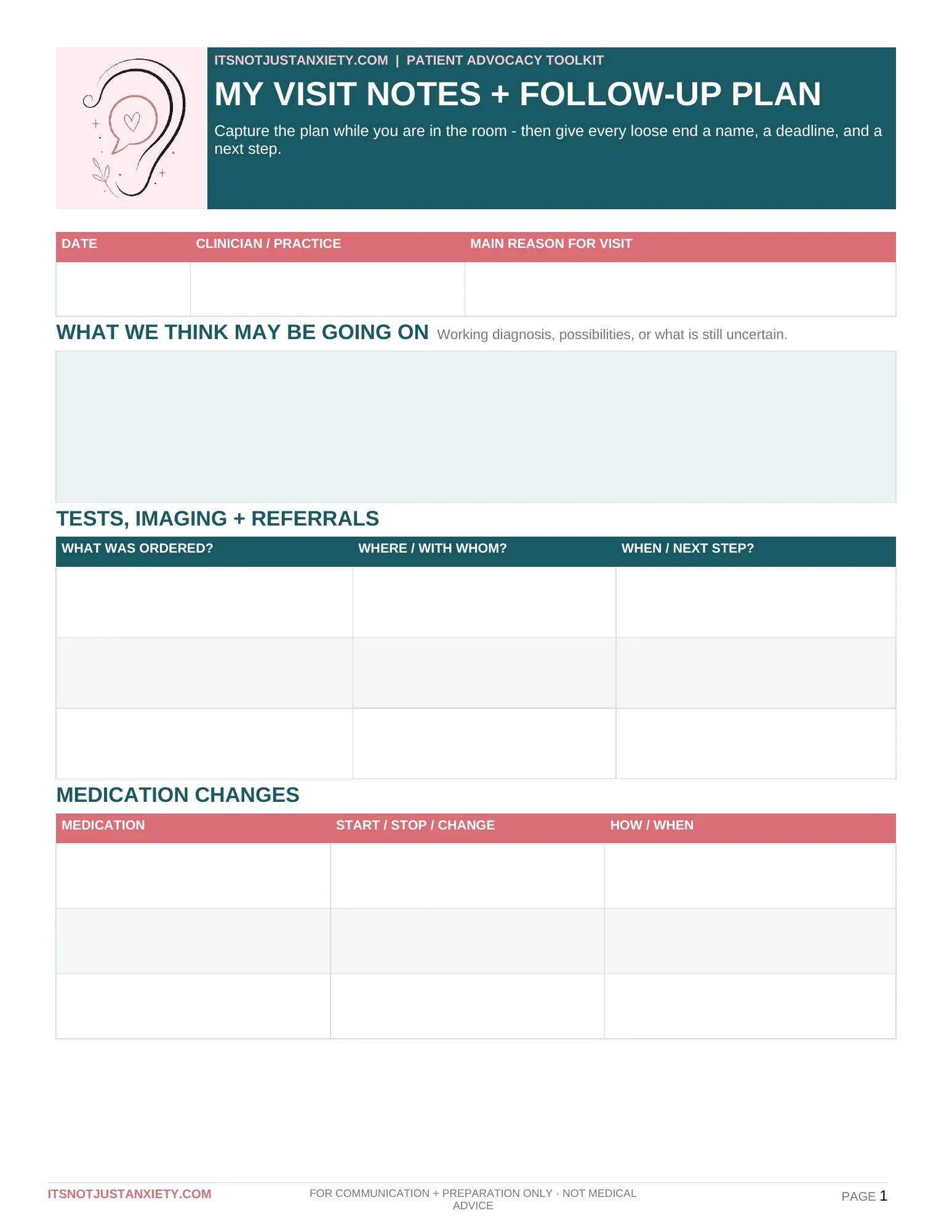
Capture what was discussed, what was ordered, medication changes, who owns each next step, and when you should follow up.
Download PDF ↓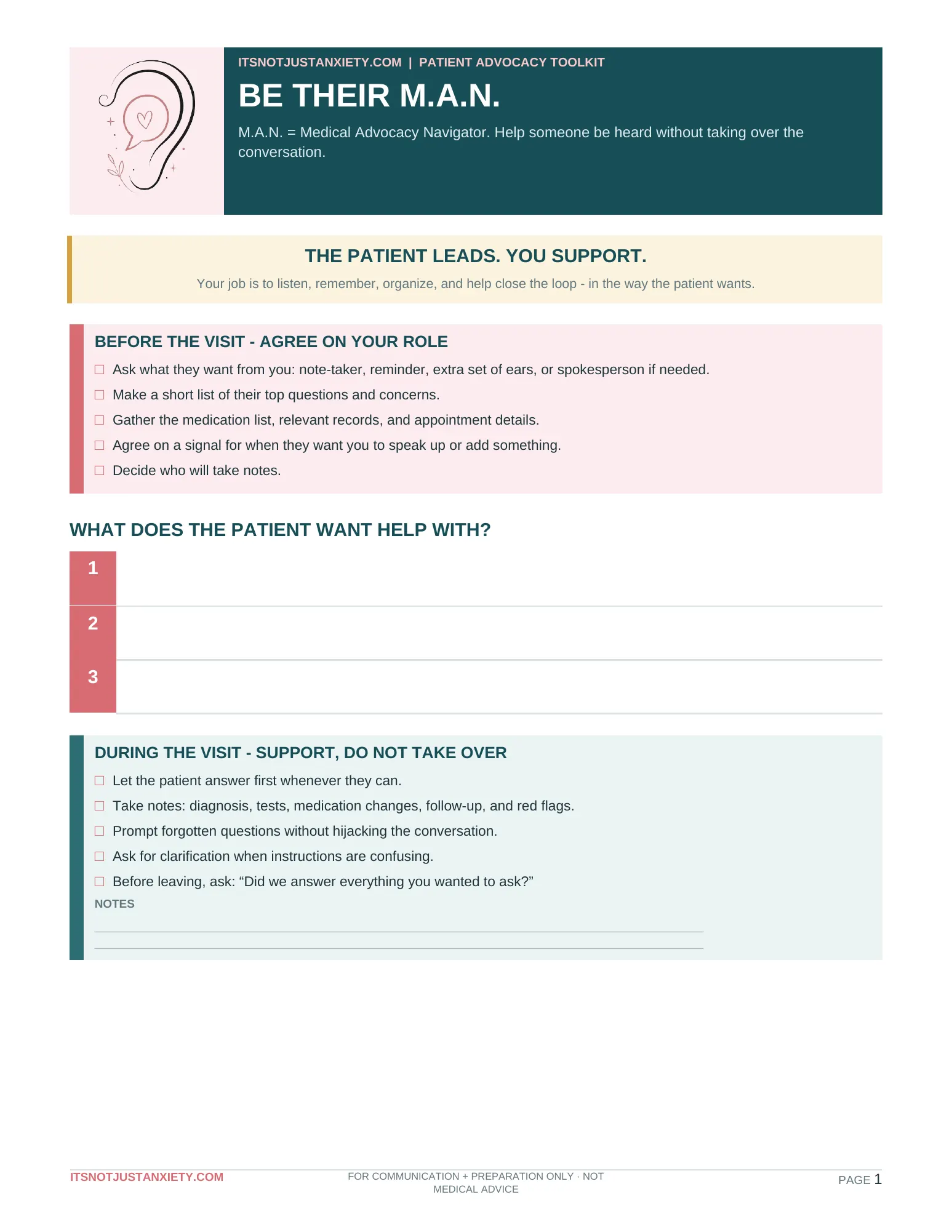
A guide for the friend, partner, parent, or other support person who is there to listen, remember, organize, and speak up only when wanted.
Download PDF ↓A CONVERSATION FRAMEWORK
H.E.A.R.D. is not a script and it is not a demand for a particular diagnosis. It is a way to keep the conversation anchored to what is happening, what has changed, and what comes next.
Acknowledge a possible explanation without giving up the rest of the question.
Anchor the discussion to what is new, changing, specific, or patterned.
Ask what the current evaluation does — and does not — tell you.
Leave knowing the next step, the timeline, and who owns each piece.
Make sure the symptoms, plan, and follow-up are accurately captured.
“
What important conditions have we ruled out so far, and what would make you investigate further?
A question can be firm without being adversarial.
BRING BACKUP
The patient leads. You support.
Your job is not to take over the appointment. It is to be an extra set of ears, a note-taker, a reminder, and — when the patient wants it — a voice that helps bring the conversation back to what matters.
A NOTE ABOUT ADVOCACY
Good care can still include watchful waiting, a normal test result, or a recommendation you did not expect. Advocacy is about having your concern understood, the reasoning explained, the next step defined, and a path for reassessment if things change.
 COMING NOVEMBER 17, 2026
THE NOVEL BEHIND THE IDEA
She hired him because doctors listen to men.
She falls for him because he listens to her.
Sadie Evans has spent years being told some version of the same thing: It's just anxiety. When a very unexpected advocate finally helps her get heard, Sadie's frustration turns into a patient-advocacy project — and an equally unexpected romance.
The book is fiction. The need to communicate clearly, ask better questions, and feel heard is very real. This site is the practical, real-world companion to that idea.
ABOUT THIS PROJECT
It's Not Just Anxiety is a patient-advocacy resource project created by Micky O'Brady, a pediatrician and author. The resources are designed to help people organize information, communicate concerns, and understand follow-up — not to diagnose symptoms or replace medical care.
Meet Micky O'Brady ↗BEFORE YOUR NEXT VISIT
Pick your top questions. Track what changed. Bring backup if you want it. And before you leave, make sure you know what happens next.